
The last cutting board you'll ever buy. We put it in writing.
Why end-grain walnut doesn't crack, warp or rock on the counter — and why we guarantee ours for two years.

If you're on your third cutting board in five years…
If your knives cost more than the board you cut on…
If your board lives on the counter and guests see it…
If your plastic board has gone white with scratches…
If you'd like one thing in your kitchen to outlast you…
…this is for you.
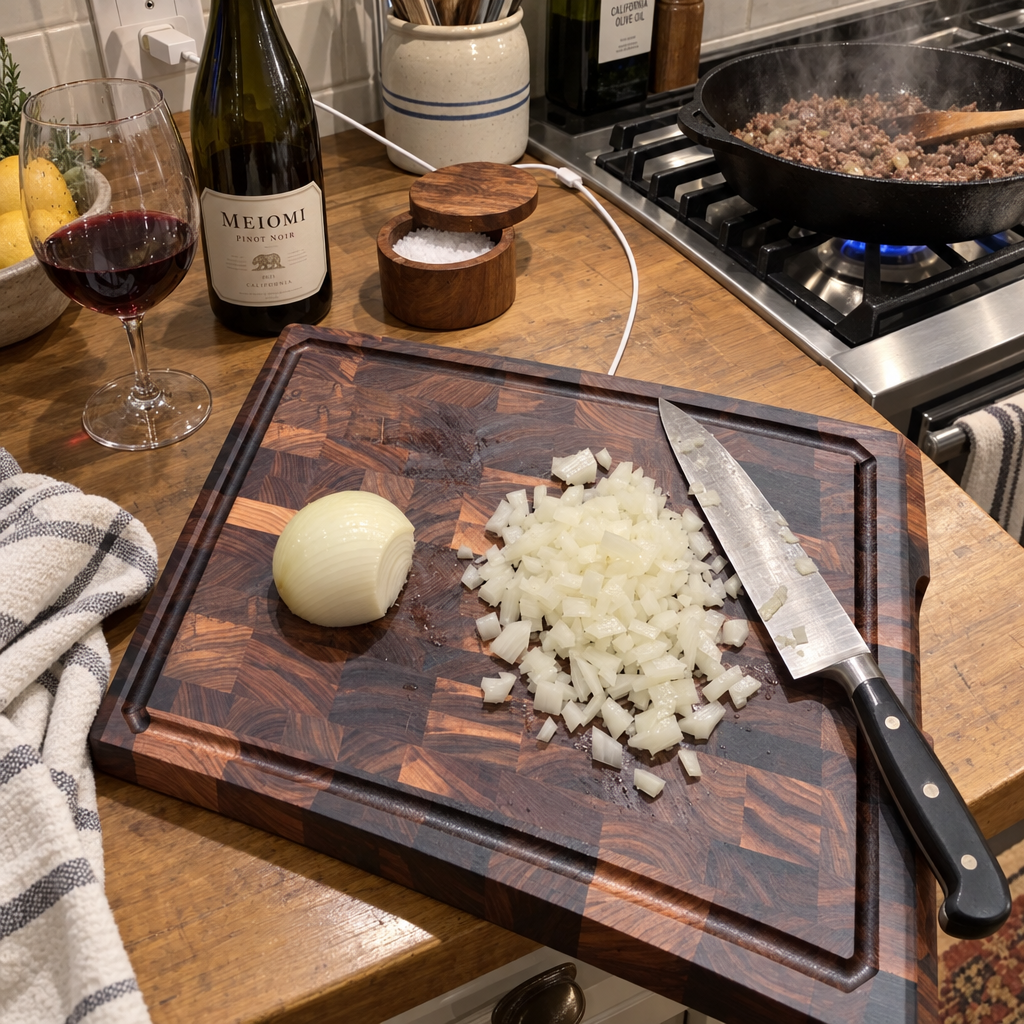
The corner lifted first. Then the board started to rock under the knife.
If you've owned a few cutting boards, you know the sound. A soft knock every time the blade comes down, because one corner no longer touches the counter. Then a hairline crack along a glue seam. Then the day you throw it out and buy another one for twenty dollars, telling yourself this time it'll be different.
I grew up around boards like that, and around one that wasn't. My father kept a block in his kitchen that was older than I was. Heavy, dark, end grain. It had seen thirty years of knives and looked better than anything in the shops. He had a rule about it: a kitchen tool you replace every two years isn't a tool. It's a subscription.
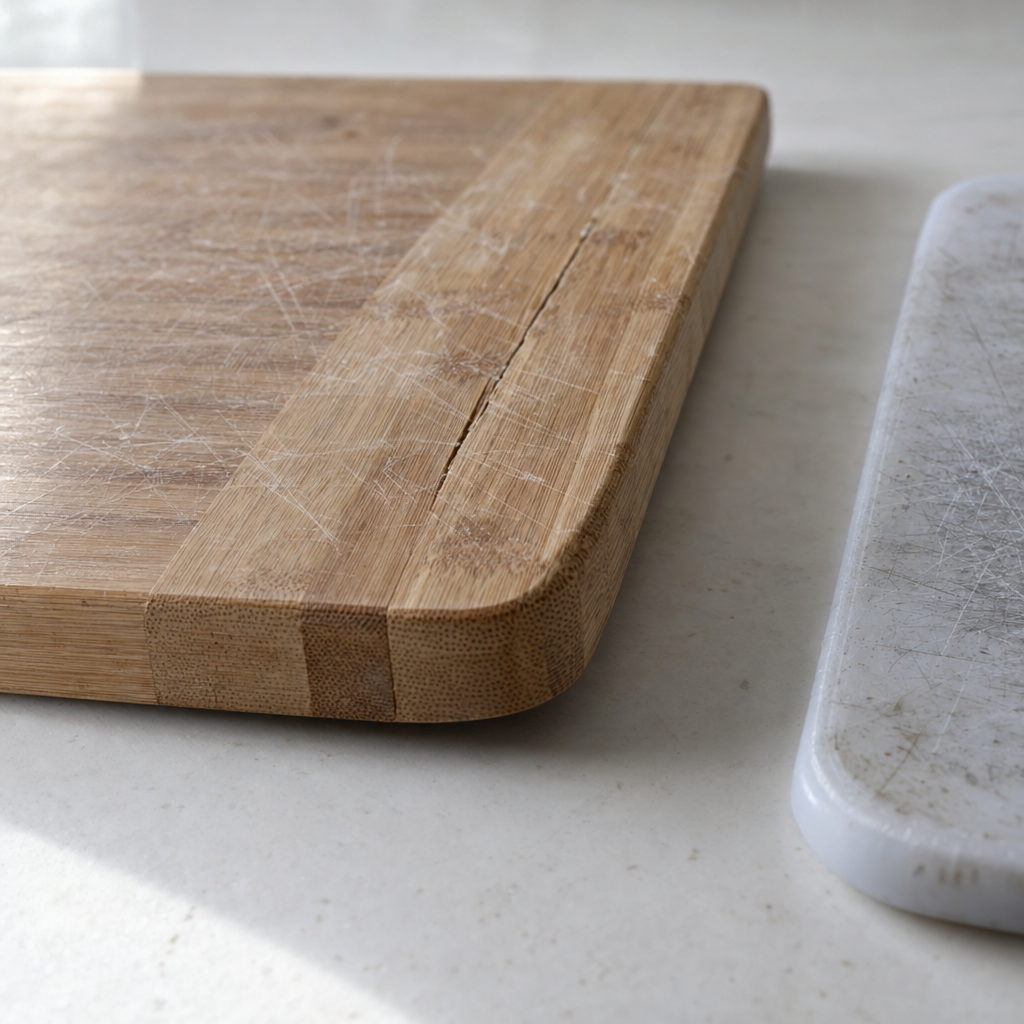
It's not you. It's the way the board was cut.
If a brand has ever told you your board cracked because of how you cared for it, I want to say this plainly: that's an excuse, not a cause.
Nearly every board in a store is cut the easy way, with the wood fibers lying sideways, like a bundle of straws laid flat. Every cut severs them. Water gets into the open ends. The board swells, dries, swells again, and moves a little each time. That's where the warp comes from. It's also why the surface fills with scars within a year.
My father's block was cut the old way, the way butchers' blocks were made: end grain. The fibers stand on end. The knife slides between them instead of across them, and the fibers close back up when the blade lifts. The board stays flat because the ends of the fibers are the surface, not the sides. It stays smooth because there's nothing to sever.
Thickness matters too. A thin board moves; a solid one holds. And a board that's shipped dry, straight from a kiln into a box, will take its first crack in your kitchen within weeks. Which is why ours is finished and conditioned before it leaves us, not shipped raw.
Why I didn't just tell you to buy the famous one
Before we made our own, I looked at everything.
The $20 bamboo board is glued strips with a hard, glassy surface. It's rough on knives and it delaminates. The plastic one scratches white within a year, and the plastic that used to be in those scratches went somewhere. Plenty of people have decided they'd rather it wasn't in their food.
Then there's the famous brand. I've read the same reviews you have: boards warping in the first month, cracks within a season, and a warranty that says warping from "moisture imbalance" isn't covered. Their walnut end-grain block costs $542.
The maker on Etsy is honest work, and I respect it. But it's one person, a three-week wait, and no one standing behind the board after it leaves his shop. He's a craftsman, not a warranty department.
What a board has to have
Here's the list my brothers and I settled on. If a board doesn't meet all five, keep looking.
- End grain. Nothing else stays flat.
- American black walnut. Dense enough to last, dark enough to hide what a lighter wood would show.
- A size that fits your sink. The big block that lives in the garage was somebody's $300 mistake.
- Finished and conditioned before it ships. A raw board cracks in its first dry week.
- A guarantee that covers warping, in writing, without a clause about how you cared for it.
The board we make
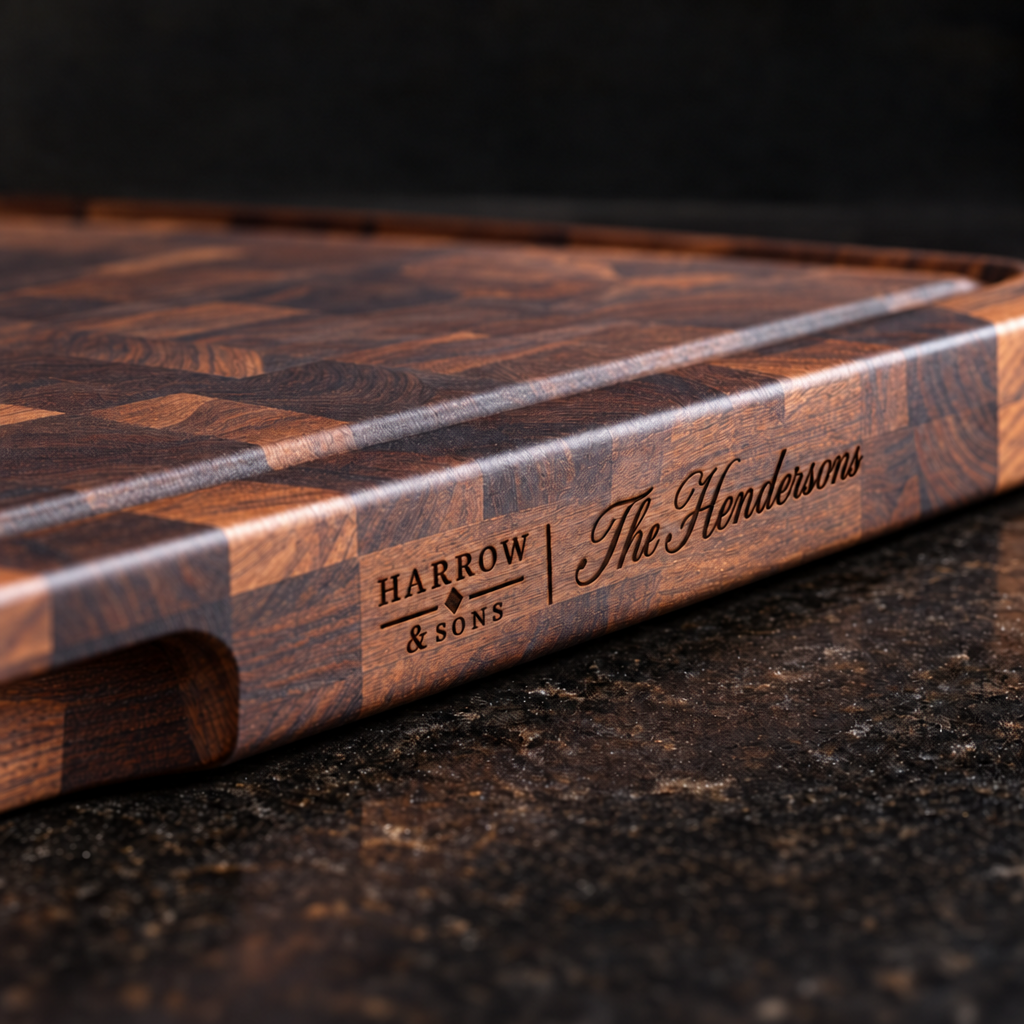
The Harrow & Sons board is American black walnut, cut end grain, in two sizes: 13 × 9 inches for everyday prep, and 16 × 12 for the cook who likes room. A juice groove on the working side. The other side is left clean for serving, and if you want your family name on that corner, we'll engrave it. We charge $70 for the engraving, and for now we're including it. Most people take it. Some don't. Both are right.
It comes finished and conditioned, with a care card that takes one minute to read, because that's all the care it needs.
Where this comes from
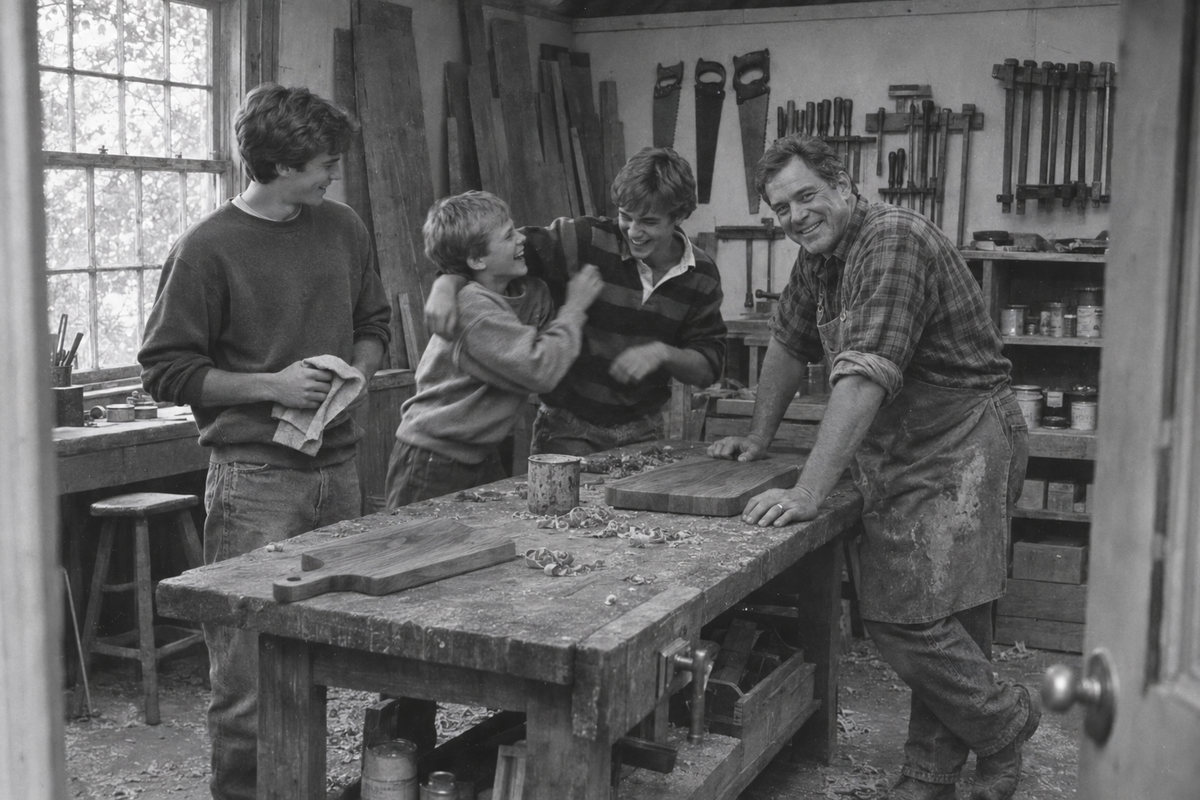
Our father cut boards for people who cooked for a living. He never advertised. Butchers and cooks found him the way they find a good knife sharpener: someone they trusted told them. He had three rules, and we grew up hearing them at dinner. End grain, because nothing else stays flat. One wood, chosen for the job, not for the catalogue. And if a board comes back, you don't argue with the man holding it. You hand him a new one.
Harrow & Sons is the three of us keeping those rules, for kitchens that aren't restaurants. The board is his. The guarantee is ours.
2 years. In writing.
If your board cracks, splits or warps in the first 2 years, we replace it. You tell us, we send a new one. No excuses, no conditions.
Make it yoursWhat it costs, and what the alternative costs
Or you can keep buying the $20 board every two years, until you stop counting.
Two kitchens
Here's the honest picture. In one kitchen there's a board that rocks, a drawer with two more under it, and a trip to the store next spring for another.
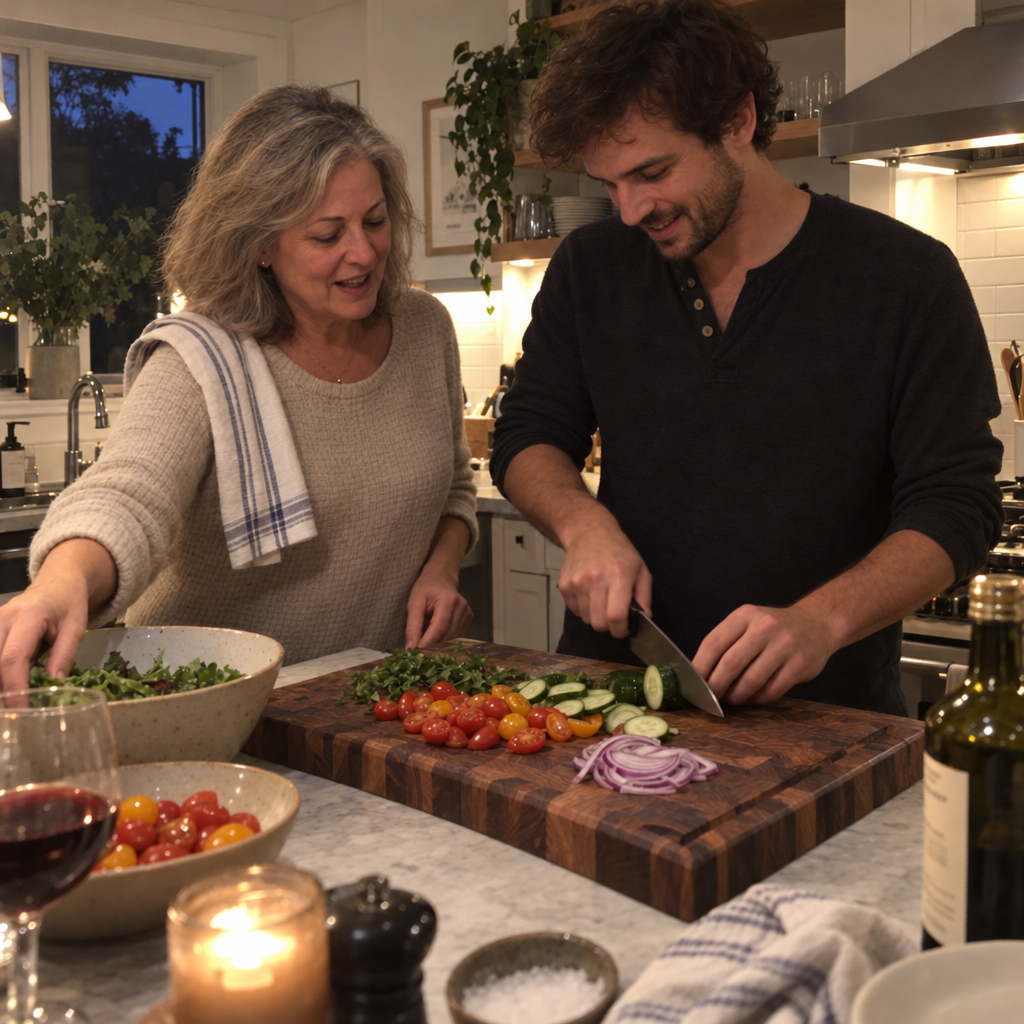
In the other there's one board. It sits on the counter because it's the best-looking thing in the room. The knives go on it. The guests ask about it. And one day, someone you raised takes it home, because it's the thing in your kitchen worth taking.
One minute of care, that's all
Rinse it, wipe it, stand it on its edge. Once a month, a thin coat of food-grade mineral oil, the kind every grocery store sells for two dollars. Never the dishwasher. That's the whole routine. We've met people who were told wood boards need a ritual. They don't. They need a minute.
A word about time
We cut and finish boards in batches, and we engrave each one to order. From your order to your door is two to four weeks. If you want it under the tree, order by November 25. If you're buying it as a gift and we're cutting it close, we'll send a card you can wrap, and the board follows.
The last board you'll buy. 2 years, in writing.
American black walnut · end grain · $70 engraving included, for now
Make it yours